
Reuse and Recycling
Itech Group Services: Excellence in IT Solutions and Asset Management > Consultation > Reuse and Recycling
IT Equipment Reuse and Recycling Services for UK Businesses
When computers, laptops, servers and other technology are replaced, they do not necessarily need to become waste. IT Equipment Reuse and Recycling provides UK businesses with a practical way to manage unwanted technology by first considering whether equipment can be reused or refurbished, and then recycling equipment that has genuinely reached the end of its useful life.
At i-Tech Business Group UK LTD, we help businesses take a more responsible approach to unwanted IT assets. From individual computers and laptops to office clearances and larger technology refresh programmes, our approach focuses on identifying opportunities for reuse, refurbishment and appropriate recycling.
A structured IT asset process can help businesses reduce unnecessary waste, improve asset management and make better use of equipment that may still have practical value.
Whether you are upgrading your office technology, relocating premises, replacing outdated computers or clearing stored equipment, we can help you explore a responsible route for your unwanted IT assets.
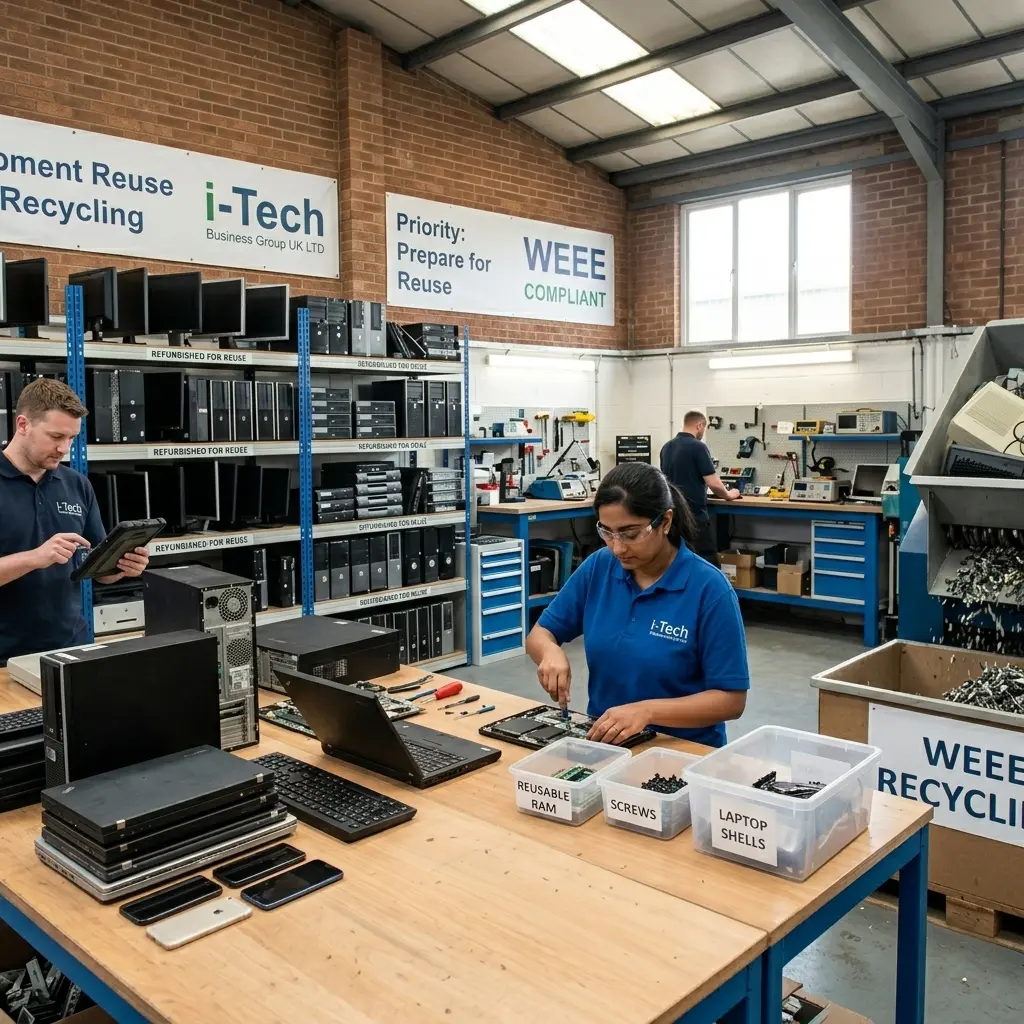
Why Reuse Before Recycling?
The most sustainable option for suitable IT equipment is often to keep it in use for longer.
A computer, laptop, monitor or server that is no longer required by one business may still be functional and suitable for another purpose. Sending usable equipment directly for recycling can mean missing an opportunity to extend its working life.
The UK Environment Agency's guidance for regulated WEEE treatment states that priority should be given to preparing suitable WEEE for reuse. Where equipment cannot be reused, it should then be recycled or recovered through an appropriate permitted or exempt treatment facility.
This makes reuse an important part of a responsible IT asset management strategy.
Reuse Can Help Businesses
- Extend the useful life of suitable technology
- Reduce unnecessary waste
- Recover value from unwanted equipment
- Support more sustainable IT practices
- Reduce the volume of equipment requiring recycling
- Make better use of existing IT assets
- Create a clearer end of life process for technology
However, reuse is not suitable for every device. Equipment should be properly assessed before deciding whether it is suitable for continued use, refurbishment or recycling.
Our IT Equipment Reuse Process
Our approach to IT Equipment Reuse and Recycling starts with understanding what equipment your business has and what condition it is in.
Rather than treating every unwanted device in the same way, equipment can be assessed according to its functionality, condition, age, specifications and potential future use.
Process
- 1. Equipment Collection
- 2. Identification and Sorting
- 3. Condition Assessment
- 4. Data Management
- 5. Reuse or Refurbishment
- 6. Recycling
IT Equipment We Can Reuse
Different types of technology can have different reuse and refurbishment opportunities.
Our IT equipment recycling and reuse services can cover a wide range of business technology.
Desktop Computers
Laptops
Servers
Monitos
Printers & Scanners
Networking Equipments
Hard Drives
Phones & Tablets
IT Accessories
IT Equipment Recycling Process
Not every device can be reused.
Some equipment may be too old, damaged, uneconomical to repair or technically unsuitable for modern requirements.
This is where IT equipment recycling becomes important.
A responsible recycling process can involve:
- 1. Collection of unwanted equipment
- 2. Identification and sorting
- 3. Assessment for reuse
- 4. Separation of equipment requiring recycling
- 5. Appropriate treatment
- 6. Recovery of materials and components
- 7. Recycling or recovery through suitable routes
The UK's WEEE framework is intended to encourage recovery, reuse and recycling of electrical and electronic products and components and reduce WEEE being sent to landfill or incineration.
For regulated WEEE treatment facilities, the Environment Agency also provides requirements covering acceptance, tracking, storage, segregation and treatment.
Refurbishment and Reuse
IT refurbishment can provide another option for suitable technology.
Refurbishment is not simply about making an old device look new. The equipment needs to be assessed to determine whether refurbishment is technically and practically appropriate.
Refurbishment is not simply about making an old device look new. The equipment needs to be assessed to determine whether refurbishment is technically and practically appropriate.
For regulated WEEE treatment facilities, the Environment Agency also provides requirements covering acceptance, tracking, storage, segregation and treatment.
- Cleaning
- Functional testing
- Hardware inspection
- Replacing suitable components
- Memory upgrades
- Storage upgrades
- Repairing minor faults
- Preparing equipment for another user
- Appropriate data sanitisation
Computer Reuse and Recycling
Computer reuse and recycling works best when businesses distinguish between equipment that still has a useful life and equipment that genuinely needs to be recycled.
For example, a five year old computer that still meets the requirements of a basic business application may have potential for reuse, while a severely damaged or obsolete device may be better suited to material recovery.
The goal is not to reuse equipment regardless of its condition. The goal is to make a sensible decision about the best route for each asset.
When Equipment Cannot Be Reused
Reuse is not always possible.
Equipment may be unsuitable because it is:
- Severely damaged
- Technically obsolete
- Unsafe
- Beyond economical repair
- Missing critical components
- No longer compatible with required software
- Not suitable for the intended user
- Subject to other restrictions affecting reuse
Environmental Benefits of IT Reuse and Recycling
A responsible IT asset programme can provide environmental benefits by prioritising reuse and recycling where appropriate.
- Extending Equipment Life
- Reducing Unnecessary Waste
- Recovering Materials
- Supporting Sustainable IT
- Better End of Life Planning
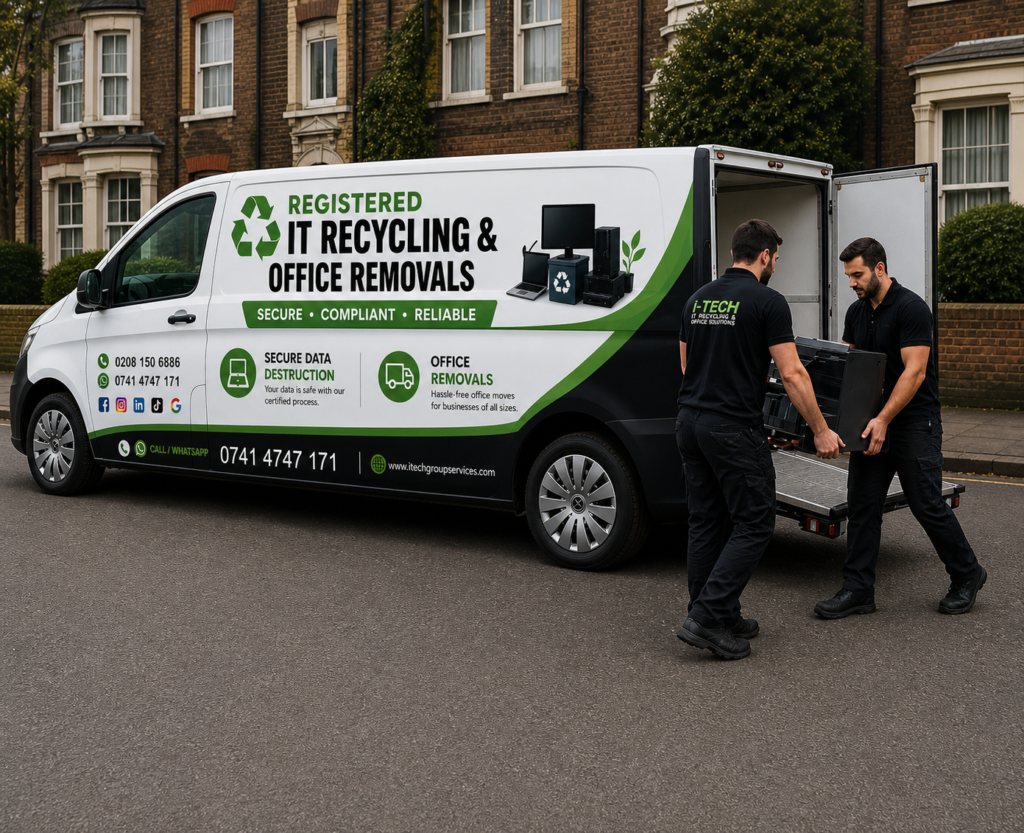
Sustainable IT Disposal for UK Businesses
Sustainable IT disposal is about managing unwanted technology with consideration for its potential reuse, recycling, data security and appropriate waste treatment.
Businesses should avoid treating unwanted computers as ordinary rubbish.
A responsible process can include:
- Identifying reusable equipment
- Separating equipment for refurbishment
- Managing data bearing devices appropriately
- Separating WEEE from general waste
- Using appropriate recycling and treatment routes
- Keeping relevant records
- Considering the environmental impact of end of life technology
Business IT Reuse and Recycling Services
Businesses of all sizes can generate unwanted IT equipment.
Our business IT recycling services can support organisations dealing with:
- Office IT upgrades
- Business relocations
- Office closures
- Equipment replacement
- IT infrastructure upgrades
- Company mergers
- Stored obsolete equipment
- End of life technology
- Multi site IT asset clearances
Why Choose i-Tech Business Group UK LTD?
Choosing an IT recycling provider is about more than simply removing unwanted equipment from your premises.
Businesses should consider how equipment is assessed, whether reuse is considered, how data-bearing assets are handled and where equipment goes after collection.
At i-Tech Business Group UK LTD, our approach is centred around helping UK businesses manage unwanted technology more responsibly.
We can help businesses explore options for:
- IT equipment reuse
- IT equipment recycling
- Business IT recycling
- Computer reuse and recycling
- IT refurbishment
- Laptop recycling
- Office IT equipment recycling
- WEEE reuse
- WEEE recycling
- Responsible IT disposal
Frequently Asked Questions
FAQs
What is IT Equipment Reuse and Recycling?
It is a structured approach to managing unwanted IT equipment by assessing whether technology can be reused or refurbished before sending unsuitable equipment through appropriate recycling and recovery routes.
Can old business computers be reused?
Yes, potentially. Working computers may be suitable for reuse depending on their condition, specifications, intended use and any applicable requirements.
What IT equipment can be reused?
Potentially reusable equipment can include laptops, desktop computers, servers, monitors, networking equipment and mobile devices. Each item should be assessed individually.
What happens to IT equipment that cannot be reused?
Equipment that cannot reasonably be reused may be directed to appropriate WEEE treatment, recycling or recovery routes.
Is computer recycling better than throwing computers away?
Businesses should not treat electrical equipment as ordinary general waste. Appropriate recycling can allow materials and components to be recovered while suitable equipment may have reuse potential.
What is IT refurbishment?
IT refurbishment involves assessing and preparing suitable technology for continued use. Depending on the equipment, this can include testing, cleaning, repair or component replacement.
Can businesses recycle old laptops?
Yes. Businesses can arrange suitable reuse, refurbishment or recycling routes for unwanted laptops, depending on their condition and applicable requirements.
What is WEEE reuse?
WEEE reuse refers to the appropriate preparation and reuse of waste electrical and electronic equipment or suitable components. Specific regulatory requirements can apply to equipment that has become WEEE.