
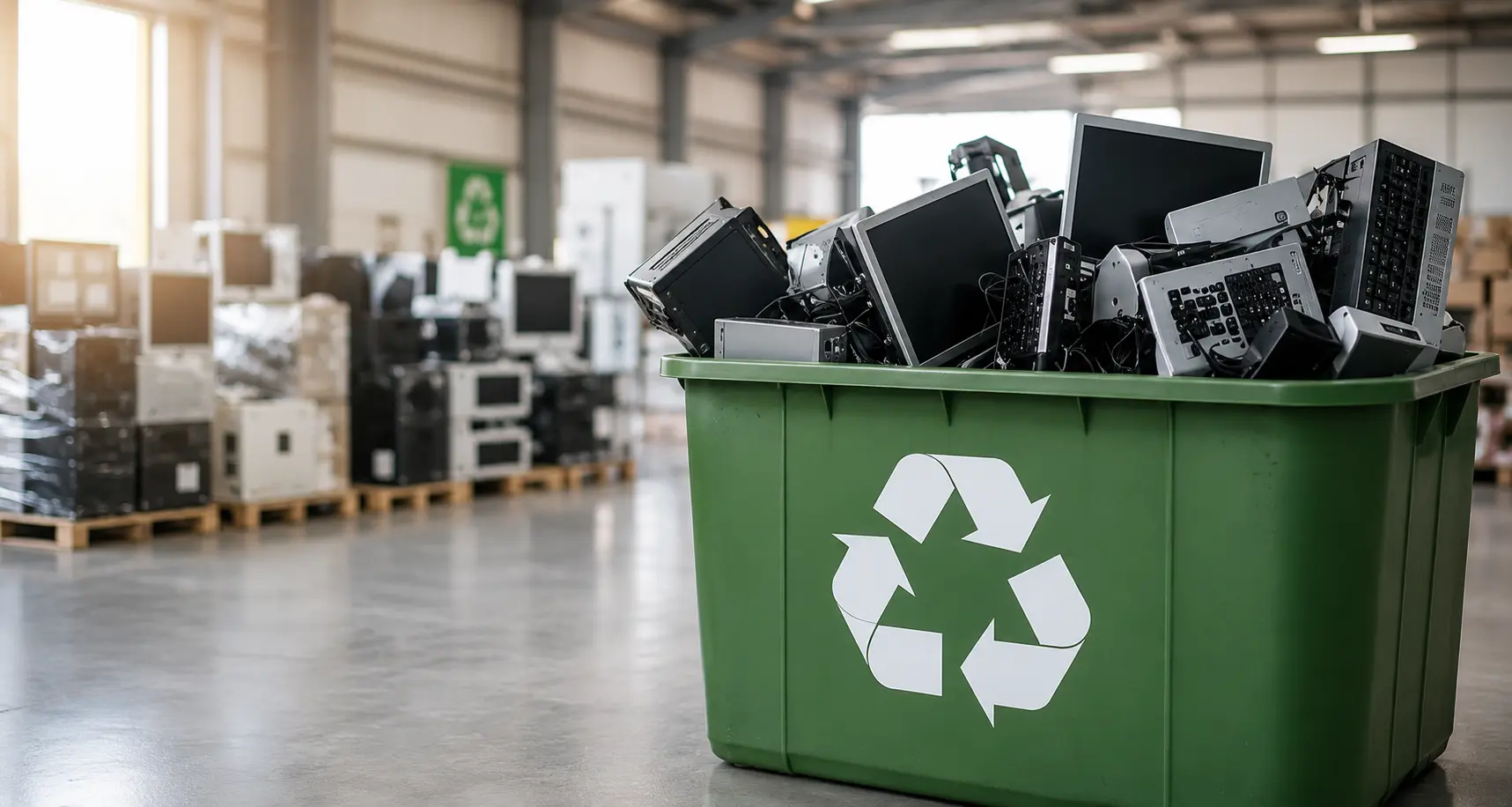
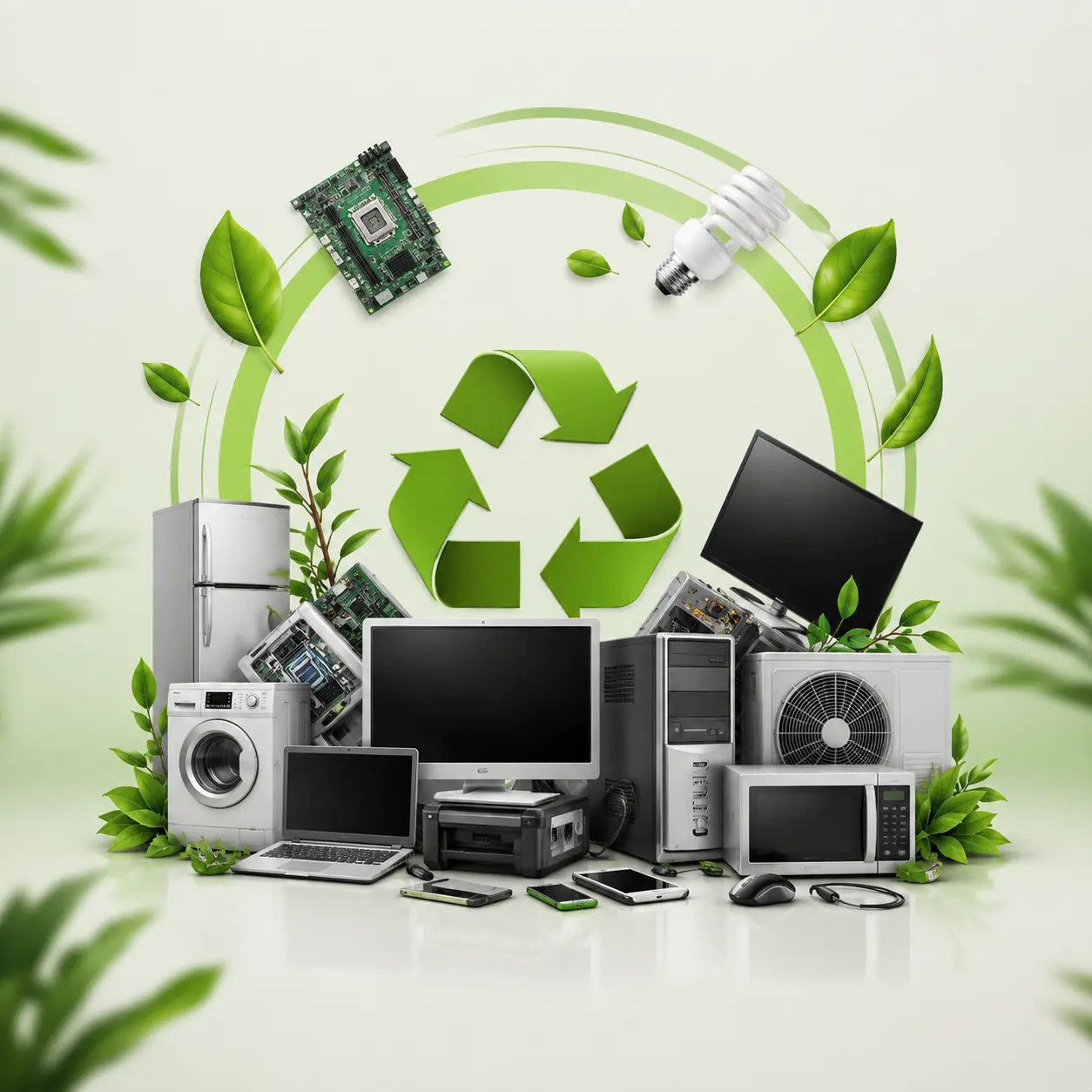
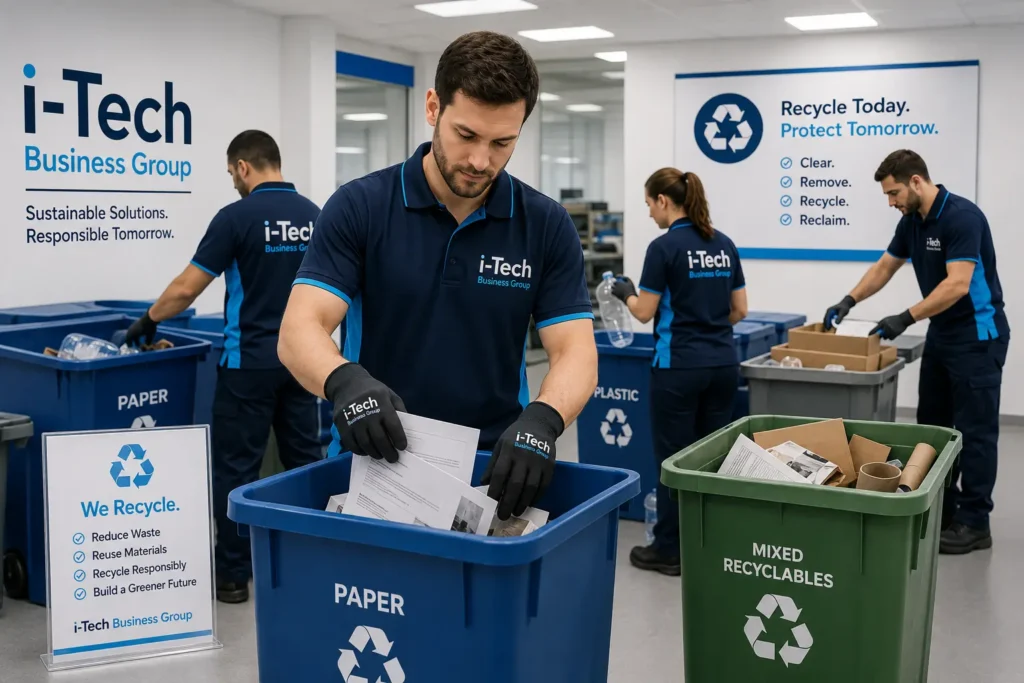
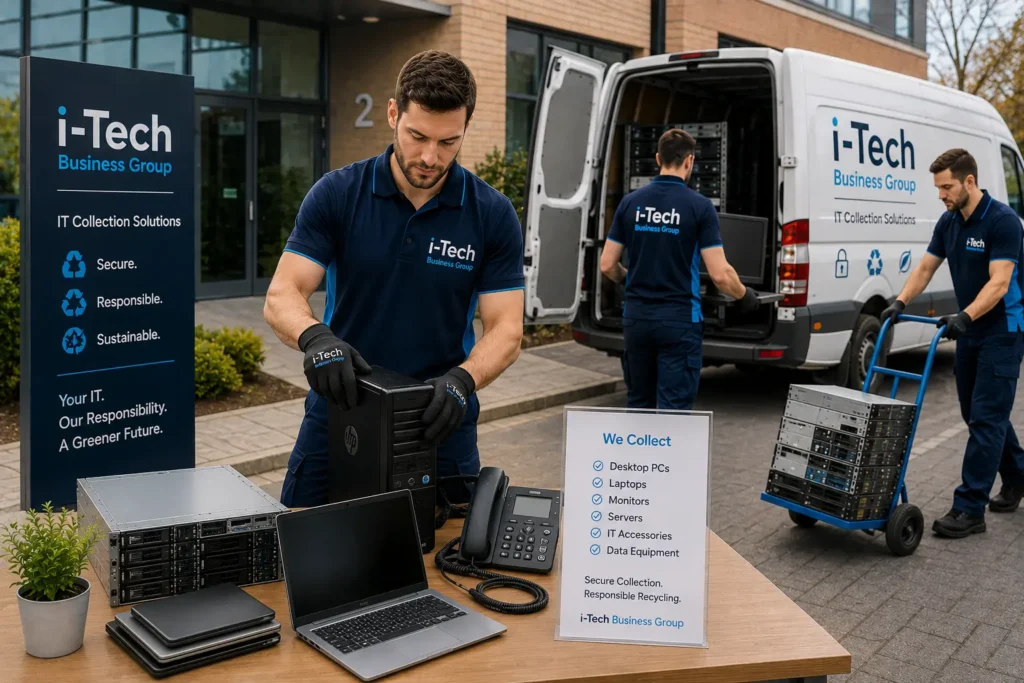
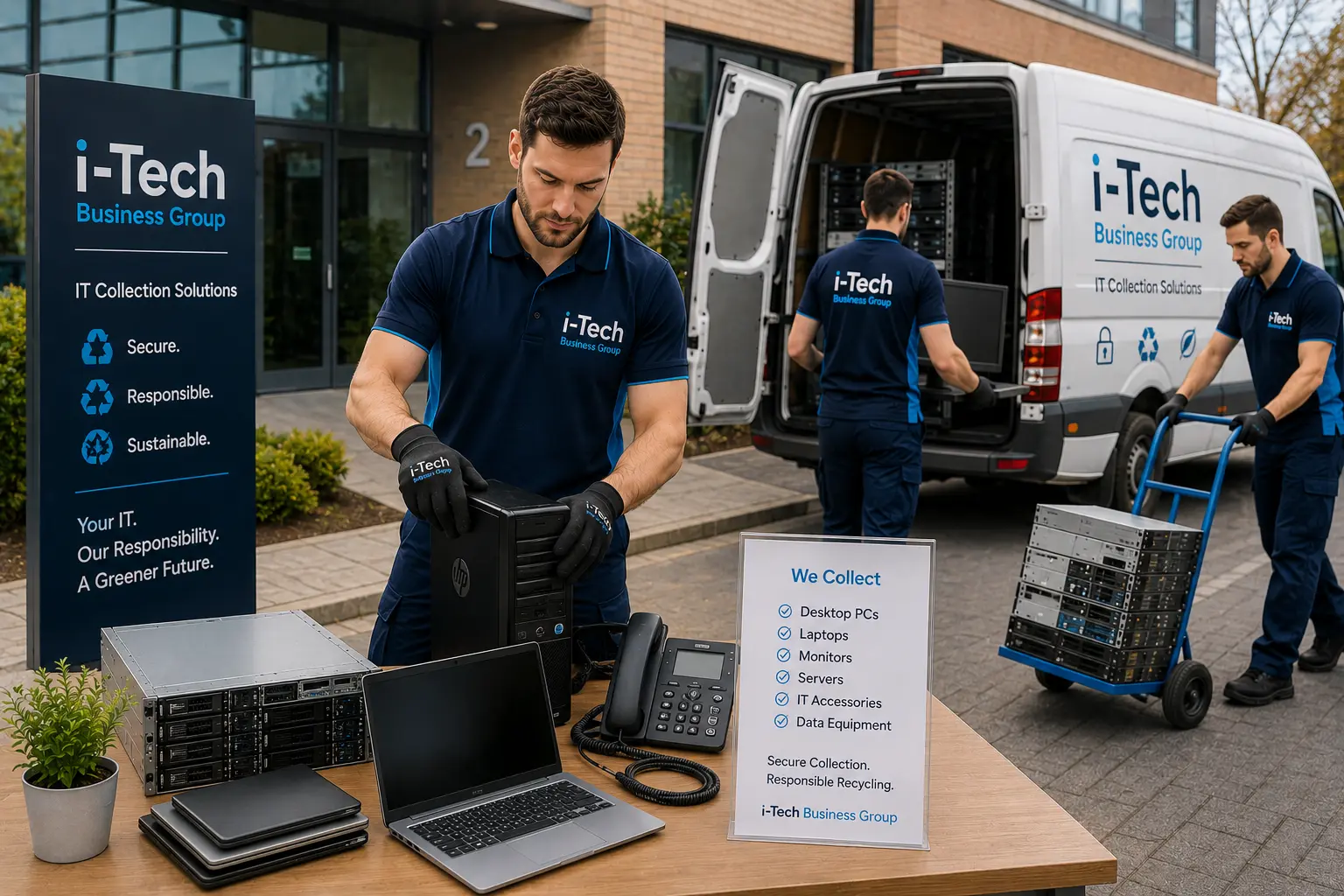
Managing unwanted electrical and electronic equipment is an important responsibility for businesses of every size. Old computers, monitors, servers, printers, networking equipment, cables, appliances and other electrical items should not simply be placed in general waste. i-Tech Business Group UK LTD provide WEEE Recycling Services to businesses with a structured way to collect, process, reuse and recycle waste electrical and electronic equipment responsibly.
Whether you are replacing office IT equipment, clearing a commercial property, upgrading your technology infrastructure or dealing with regular electrical waste, a professional recycling service can help you manage the process efficiently.
Our WEEE Collection Services are designed to help UK organisations arrange the responsible removal and recycling of unwanted electrical equipment while supporting good environmental and waste management practices.
From individual business collections to larger commercial clearances, professional electrical waste recycling can help reduce unnecessary disposal, recover valuable materials and ensure waste is handled through appropriate treatment and recycling routes.
WEEE stands for Waste Electrical and Electronic Equipment. It refers to electrical and electronic products that have reached the end of their useful life or are no longer wanted.
Examples include:
Desktop computers and laptops Monitors and screens Servers and data centre equipment Printers, scanners and photocopiers Routers, switches and networking equipment Telephones and communication equipment Electrical tools Small and large electrical appliances Cables and chargers Electronic components Audio and visual equipment IT peripherals Other equipment that depends on electricity or electronic functionality
The UK WEEE Regulations cover electrical and electronic equipment across 15 broad categories, although certain equipment is excluded from the regulations. Businesses should therefore ensure that waste is correctly identified and managed according to the applicable requirements.
Professional recycling is not simply about removing unwanted equipment. A responsible process should consider whether equipment can be reused or refurbished before materials are recovered through recycling.
Electrical equipment can contain a combination of valuable, reusable and potentially hazardous materials. Sending electrical equipment to general waste can therefore create environmental and compliance concerns.
A professional service can provide a more controlled alternative.
Our WEEE Collection Services can be suitable for organisations that need electrical equipment removed from commercial premises.
Businesses often generate electrical waste as part of normal operations.
For example, an organisation may replace hundreds of computers during an IT upgrade. A retail business may remove obsolete electronic equipment during a refurbishment. A manufacturing company may have electrical components and equipment that are no longer required.
Commercial WEEE Recycling provides a dedicated approach for managing these materials.
It can be useful for:
Modern workplaces can produce a wide range of electronic waste.
A typical office clearance might include:
A responsible electrical recycling process can involve several stages.
Equipment is collected from the agreed business location.
The collected material can be sorted according to equipment type, condition and recycling requirements.
Where equipment remains suitable for further use, reuse or refurbishment may be considered.
Where electronic devices contain storage media, appropriate data sanitisation or destruction should be completed before equipment is reused, resold or recycled.
Equipment that cannot be reused can be processed to recover materials.
WEEE should be sent through appropriate treatment and recycling channels. The UK Government maintains information and public registers relating to approved authorised treatment facilities and approved exporters.
Choosing a suitable WEEE Disposal Services provider should involve more than comparing collection prices.
Businesses should consider how the provider manages the waste after collection.
Important questions include:
Where will the equipment be taken?
Is the waste handled through appropriate treatment routes?
Can the provider explain the recycling process?
Is equipment assessed for reuse?
How is data bearing equipment handled?
What documentation is provided?
Are relevant environmental and waste requirements addressed?
Can the provider handle the volume and type of equipment your organisation produces?
The right provider should offer a clear process rather than simply removing equipment from your premises.
Look for a service that prioritises:

Our professional WEEE Collection service allows businesses to safely remove unwanted electrical equipment from their premises.
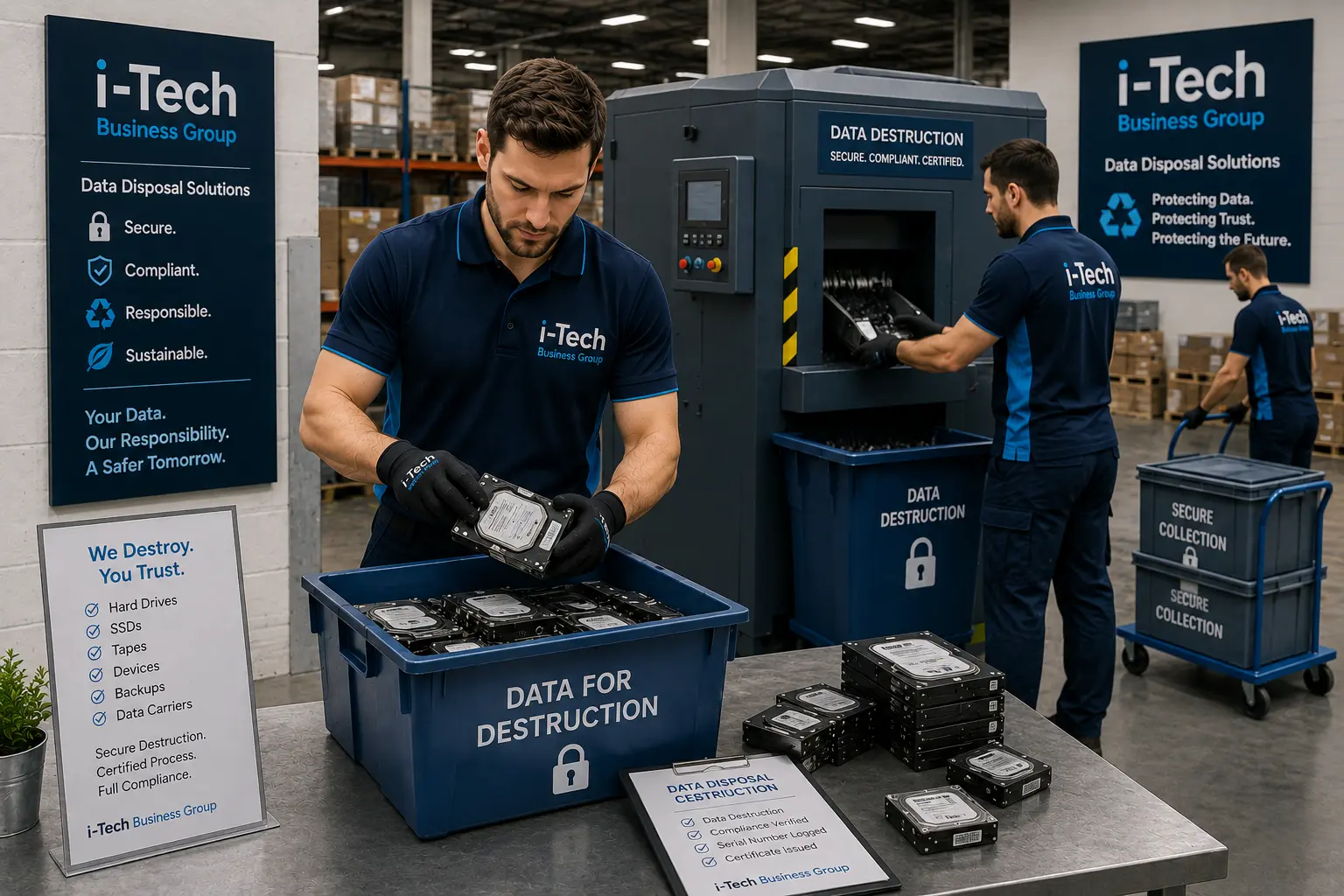
Our Data Destruction Service helps businesses securely remove sensitive data from hard drives, storage devices and other digital equipment.
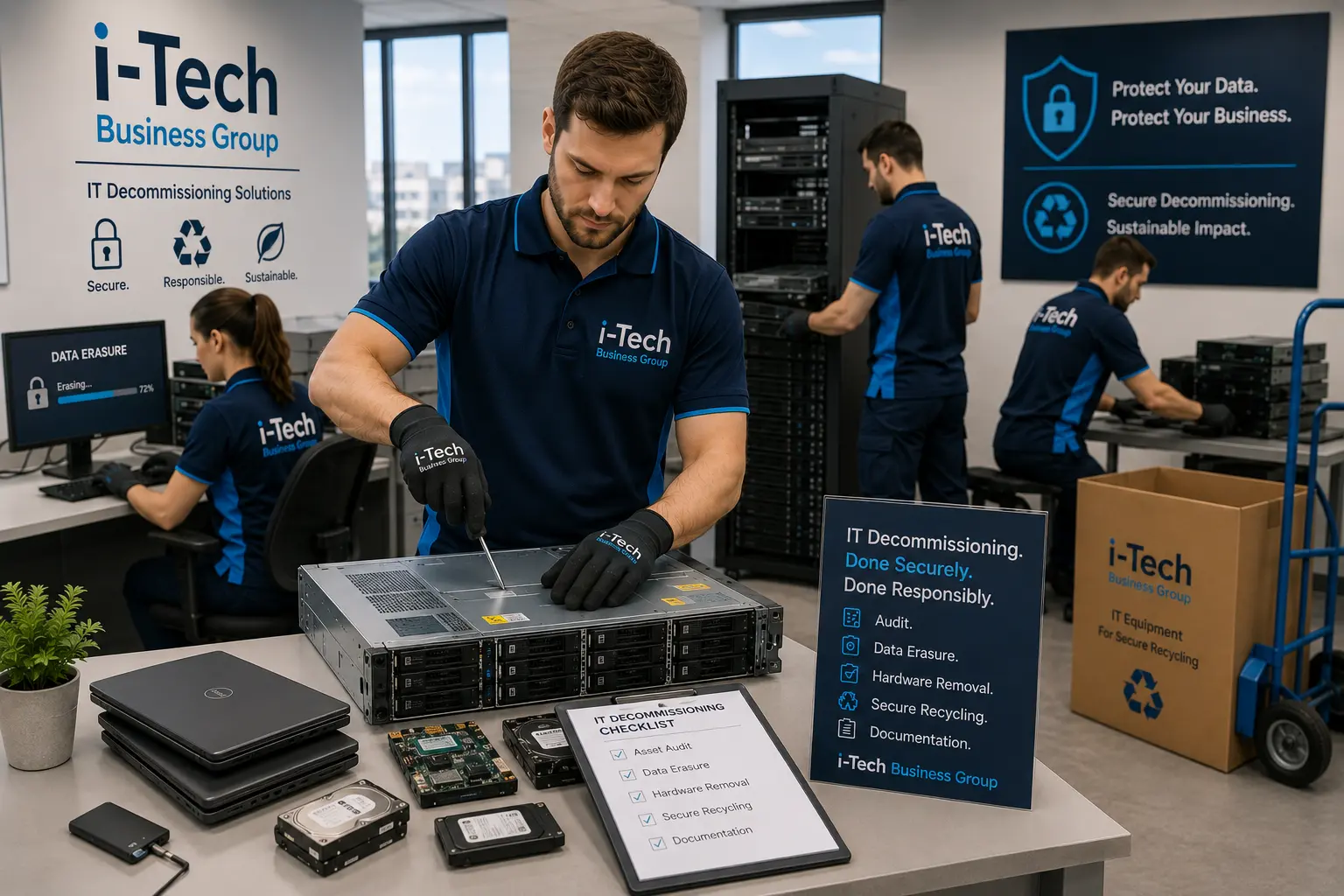
Our professional IT Decommissioning services help organisations safely retire outdated IT infrastructure.
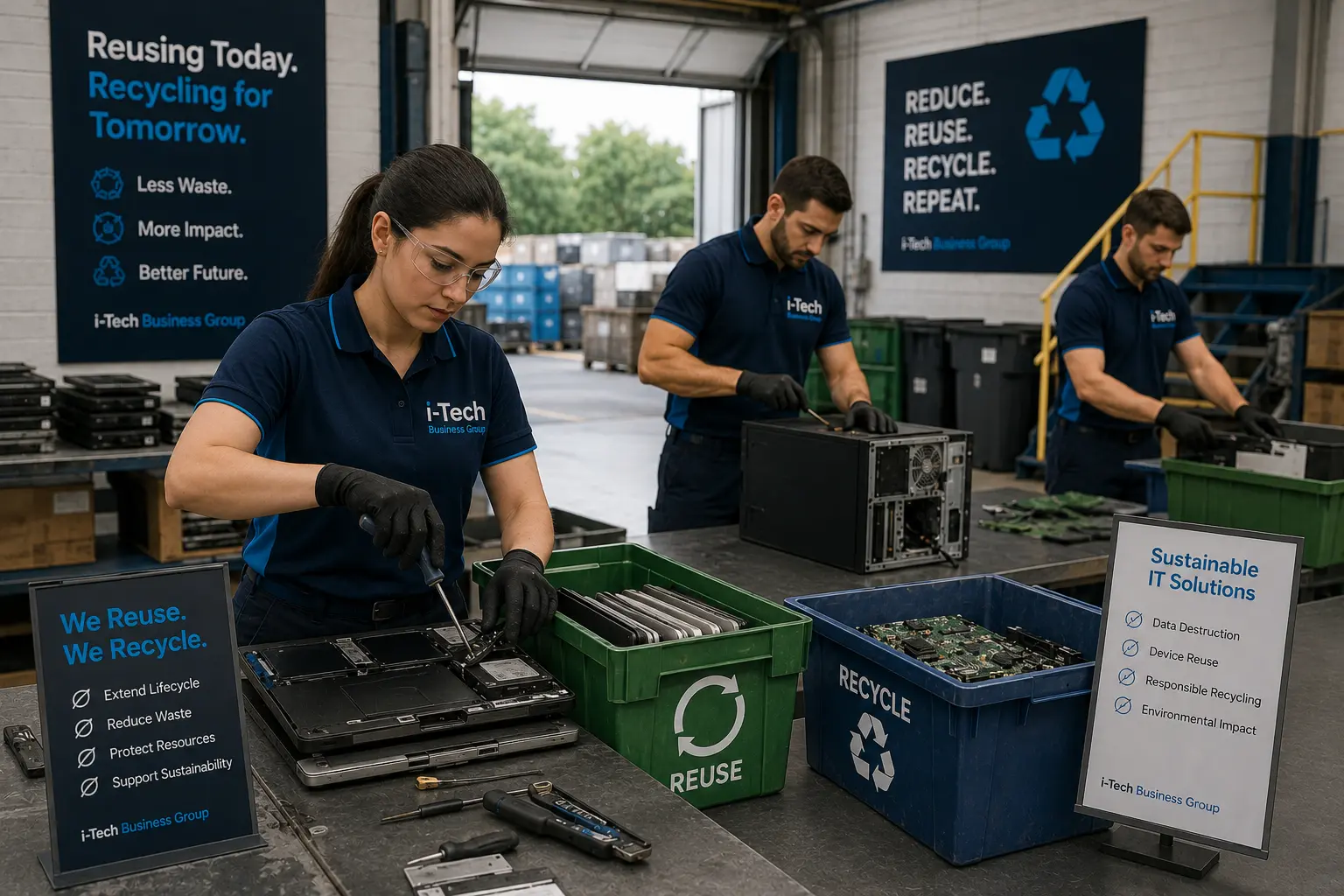
Through our Reuse and Recycle approach, suitable equipment may be refurbished and given a second life instead of being immediately recycled.
Initiating Your Journey to Success and Growth.
+44 208 150 6886
info@itechgroupservices.com
i-Tech Business Group UK LTD, Unit J 334-340 Romford Road, Forestgate, London, E7 8BS
WEEE stands for Waste Electrical and Electronic Equipment.
WEEE Recycling covers Computers , Phones , Laptops , Servers , Printers and more.
Yes. Old computers can potentially be reused, refurbished or recycled depending on their condition. If they contain business data, appropriate data destruction or sanitisation should also be considered.
WEEE can be sorted, assessed for reuse, processed for recycling and sent through appropriate treatment routes. The exact process depends on the equipment and its condition.
Certain businesses have specific responsibilities under the UK WEEE framework, particularly manufacturers, importers, rebranders, distributors and retailers. The exact requirements depend on the organisation's role and the equipment involved.