
How E-Waste Recycling Protects Your Business and the Environment
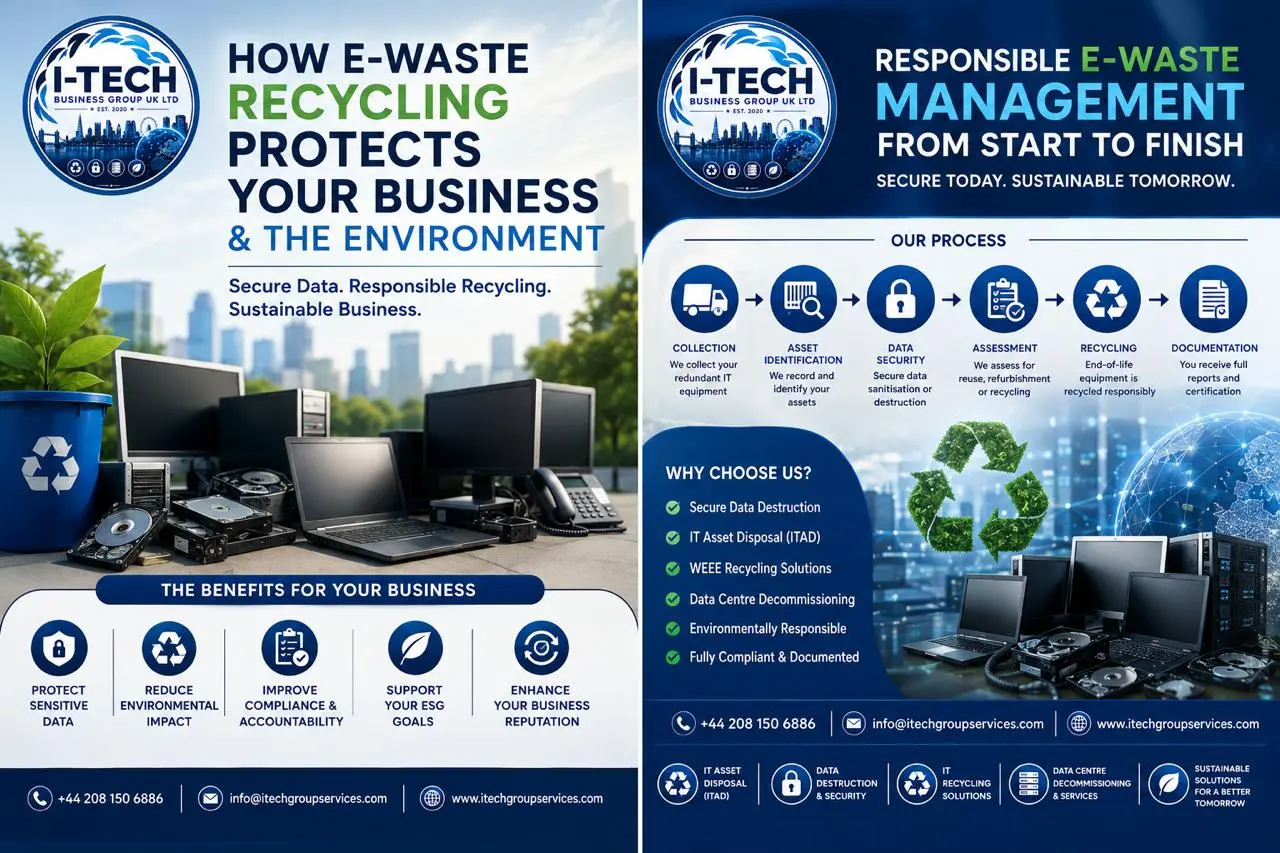
Turning old technology into a safer, more sustainable business future.
Every modern business depends on technology. From laptops and desktop computers to servers, monitors, printers, phones and networking equipment, electronic devices are essential to daily operations.
But what happens when that equipment reaches the end of its useful life?
Simply throwing old electronics into general waste can create environmental, security and compliance risks. Responsible e-waste recycling gives businesses a safer alternative—protecting sensitive information, supporting sustainability and helping valuable materials return to the circular economy.
What Is E-Waste?
E-waste, also known as Waste Electrical and Electronic Equipment (WEEE), includes electrical and electronic equipment that is no longer wanted or usable.
For businesses, this can include:
• Desktop computers and laptops
• Servers and networking equipment
• Monitors and screens
• Printers and photocopiers
• Mobile phones and tablets
• Keyboards, mice and other peripherals
• Cables and power supplies
• Hard drives and storage media
• Audio visual equipment
• Other electrical office equipment
Protect Your Business Data
One of the biggest risks associated with old IT equipment isn’t the hardware itself it’s the data stored on it.
Old laptops, computers, servers, hard drives, USB devices and mobile phones can contain:
• Customer information
• Employee records
• Financial information
• Passwords and credentials
• Business documents
• Emails
• Intellectual property
• Commercially sensitive information
Deleting files or performing a normal factory reset does not automatically mean that data can never be recovered.
A responsible IT recycling process should therefore consider secure data sanitisation or physical destruction of data-bearing devices before recycling or reuse.
This creates an important connection between cybersecurity and environmental responsibility: secure data destruction protects the organisation while responsible recycling protects the environment.
Reduce Environmental Impact
Electronic equipment contains a mixture of materials, including metals, plastics and other components.
When electronic waste is handled incorrectly, potentially harmful substances can enter the environment, while valuable resources are lost.
The UK government states that WEEE regulations are intended to reduce electrical waste going to landfill or incineration and encourage reuse, recovery and recycling. Recycling allows useful materials to be recovered and reintroduced into manufacturing processes.
This supports a more circular economy, where products and materials remain in use for longer rather than following a simple “use and dispose” model.
Reuse Before Recycling
Recycling should not always be the first option.
If equipment is still functional and suitable for another purpose, reuse or refurbishment can extend its useful life.
For example, an organisation upgrading its laptops may have older devices that can potentially be:
Collected → Data Sanitised → Tested → Refurbished → Reused
Equipment that cannot reasonably be reused can then move into an appropriate recycling process.
This approach helps maximise the value of existing resources and can reduce unnecessary demand for new equipment.
The UK WEEE framework specifically promotes recovery, reuse and recycling as part of responsible electrical waste management.
Support Your ESG and Sustainability Goals
Businesses are increasingly expected to demonstrate how they manage their environmental impact.
Responsible e-waste management can contribute to wider sustainability programmes by helping organisations demonstrate:
• Responsible waste management
• Resource recovery
• Reuse of equipment
• Reduction of unnecessary waste
• Responsible IT asset management
• Environmental awareness
• Documented recycling activity
Rather than simply saying “we recycle our IT equipment,” businesses can build a stronger sustainability story when they maintain appropriate records showing what equipment was collected, processed, reused or recycled.
Improve Compliance and Accountability
Responsible business waste management is not simply about putting equipment into a recycling container.
GOV.UK guidance states that businesses have responsibilities around minimising waste, reuse and recycling, safe storage and appropriate documentation. Businesses must also use registered waste carriers and complete waste transfer documentation where required.
For organisations involved in placing electrical and electronic equipment on the UK market, additional WEEE producer responsibilities may apply. Depending on the circumstances and quantities involved, businesses may need to register or participate in a producer compliance scheme.
This is why businesses should choose appropriate and properly documented recycling routes rather than simply giving obsolete equipment to an unknown disposal company.
Create a Clear Chain of Custody
A professional e-waste process should provide visibility from collection through to final treatment.
A typical business process can look like this:
Step 1 — Collection
Equipment is collected from the business premises.
Step 2 — Asset Identification
Items can be recorded, categorised and, where appropriate, linked to asset or serial numbers.
Step 3 — Data Security
Data-bearing devices are securely sanitised or physically destroyed according to the required process.
Step 4 — Assessment
Equipment is assessed for potential reuse, refurbishment or recycling.
Step 5 — Recycling
End of life equipment is processed through appropriate WEEE recycling channels.
Step 6 — Documentation
The business receives relevant records and documentation demonstrating what happened to its equipment.
For regulated WEEE treatment operations, Environment Agency guidance includes requirements around waste tracking, storage, handling and treatment.
Protect Your Reputation
Customers, employees, suppliers and business partners increasingly care about how organisations handle environmental and information security responsibilities.
Poor disposal practices can create unnecessary reputational risks.
Imagine discovering that an old company laptop containing confidential information was abandoned in general waste.
The problem would no longer be just an environmental issue.
It could become a data-security, compliance and reputational issue.
A documented recycling and data-destruction process demonstrates that your organisation takes these responsibilities seriously.
Turn Old Technology Into Valuable Resources
Your unwanted IT equipment is not necessarily worthless.
Computers and electronic equipment can contain materials that can be recovered through appropriate recycling processes.
Instead of:
Buy → Use → Throw Away
businesses can move towards:
Buy → Use → Reuse → Recover → Recycle → Recover Materials
This approach helps reduce waste and supports the more efficient use of resources.
What Should Businesses Look for in an E-Waste Recycling Partner?
Before handing over your company’s technology, ask the recycling provider:
♻️ Is the recycling process appropriate for WEEE?
🔐 How is data bearing equipment handled?
📋 Will I receive documentation?
🚚 How is equipment collected and transported?
🔎 Can assets be tracked through the process?
♻️ Are reusable devices assessed before recycling?
📊 Can you provide reporting for our environmental or compliance records?
🏢 Where does the equipment ultimately go?
The answers to these questions can help you distinguish between a professional IT asset disposal process and simply getting rid of unwanted equipment.
The Business Case for Responsible E-Waste Recycling
Responsible e-waste recycling isn’t just about protecting the planet.
It can help businesses address several important risks at the same time:
Business Need How Responsible E-Waste Management Helps
🔐 Data security Supports secure handling of data-bearing equipment
♻️ Sustainability Diverts electronics towards reuse and recycling
📋 Compliance Creates appropriate records and documentation
🌍 Environmental responsibility Helps recover materials and reduce unnecessary waste
🏢 Reputation Demonstrates responsible business practices
📊 ESG reporting Provides useful evidence of environmental activity
🗄️ Office management Removes obsolete equipment and frees storage space
Final Thoughts
Every business eventually reaches the same point: technology becomes obsolete.
The question is not whether your organisation will have electronic waste.
The question is how responsibly you manage it.
A strong e-waste strategy combines:
Secure Data Destruction + Responsible Collection + Reuse + WEEE Recycling + Documentation
When these elements work together, businesses can protect sensitive information, reduce environmental impact and create a more responsible approach to technology disposal.
The UK’s WEEE framework continues to place emphasis on recovery, reuse and recycling, while businesses also have wider responsibilities for managing commercial waste appropriately.
Don’t let obsolete technology become a business risk. Turn it into an opportunity for better security, better compliance and a better environment.
How I-Tech Business Group Can Help
I-Tech Business Group UK Ltd can support organisations with responsible technology and e-waste management, including IT equipment disposal, data sanitisation, secure data destruction and WEEE recycling.
Our approach focuses on helping businesses manage redundant technology responsibly—from collection and secure handling through to recycling and appropriate documentation.
Ready to review your organisation’s e-waste process?
📞 +44 208 150 6886
📧 info@itechgroupservices.com
🌐 www.itechgroupservices.com
I-Tech Business Group UK Ltd
Secure Data. Responsible Recycling. Sustainable Business.
Important Note
WEEE obligations can vary depending on the role of the business, the equipment involved and whether the organisation is a producer, distributor, holder or waste operator. Businesses should obtain appropriate regulatory advice for their specific circumstances.